Tests for brain tumours
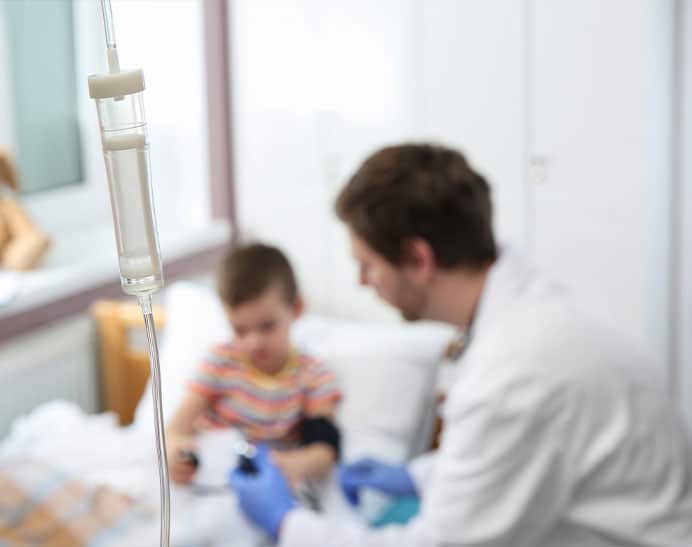
How do doctors test for brain tumours?
When you hear your child may have a brain tumour, it is totally normal to feel emotional and overwhelmed.
Remember that nothing is certain until doctors have investigated properly, and the outcome may not be as bad as you are imagining.
If your doctor suspects your child has a tumour, the first thing they will do is refer them to a paediatrician. They will run different tests to determine if they do have one, and if they do, what type it is.
The tests for brain tumours can include an examination, an MRI scan, a CT scan, blood tests, testing a sample of tissue (biopsy), a lumbar puncture or other tests. In some cases, depending on the test and the age of your child, they may be sedated or under general anaesthetic for this.
Some of these tests can be intimidating, and it can be upsetting to watch your child go through them. The doctors will do their best to make the procedures as pain-free as possible, but there can still be some discomfort.
It may feel at the time like the tests for brain tumours are doing more harm than good, remind yourself that this is an important part of the treatment process.
We understand this is the first step in a daunting journey but remember, you’re not alone, we’re here to provide information and support.

Tests for Brain Tumours
Neurological testing
This is when a doctor assesses your child’s nervous system to spot any abnormalities, which could indicate a potential issue. The examination is generally painless and non-invasive.
These tests can involve:
- Asking your child to squeeze the doctor’s hands or push the doctor’s hands with their feet to assess their strength
- Looking at the back of their eyes to see if there are any issues with vision or movement
- Looking for any numbness or lack of sensation in the body
- Giving your child directions or commands and seeing how well they can do them. This would be reading or writing, if your child is old enough to do so.
Your child will be able to go about their day as normal after this examination.
MRI Scans
An MRI (Magnetic Resonance Imaging) uses magnets and radio waves to create images of the inside of the body, particularly soft tissues like the brain.The MRI machine does not use any radiation. The MRI scan will be able to show the size and location of your child’s tumour, but it cannot tell which kind of tumour your child has. Children are usually given an injection of a special contrast dye before or during the scan to help make the pictures clearer.
On the day, make sure your child’s clothes are metal-free. The team will carry out a check beforehand.
During the MRI scan, your child will lie on a table that slides into a tube-like machine. There is lots of space and light in the tube. However, the MRI machine does make a knocking sound that can be quite loud. The healthcare team can provide your child with earplugs or headphones with music to help ease any anxiety they may have in the machine. The team often stay with your child to reassure them.
The scan usually takes between 30 and 60 minutes. Your child must lie very still during the scan – in some cases doctors will sedate the child to help keep them relaxed.
These images of the tumour will be analysed by a radiologist and medics can use the information to develop a treatment plan specific to your child’s needs.
In some cases, MRI scans are carried out after surgery to check how much of the tumour has been removed.
Your child will be free to go home after the MRI, but will stay in the hospital for a few hours if sedation or anaesthetic was used to ensure it has worn off. Medics may also give your child something to eat and drink.
MRI scans are painless, usually quick and have no lasting effects. The scanner does not touch your child.
CT scans
Blood tests
A doctor or nurse will draw a small amount of blood from your child for testing. This is usually taken from the inside of the elbow or the back of the hand. The doctor or nurse may apply a local anaesthetic – a numbing spray or cream – to your child’s skin beforehand. The child may still feel the needle going in, but it should be less painful.
The blood sample will be sent to a lab for testing. The specialised medics will be looking for tumour markers in the blood. These are substances found in the blood that can give clues about the presence of a tumour. By detecting and studying these markers, doctors should be able to find out the type of tumour and its grade. This tests for brain tumours provides key information for making a treatment plan suited to your child’s unique needs.
Most blood tests only take a few minutes. You can help distract your child during the test by talking to them, singing or watching something on your phone. After the test your child will be able to eat, drink and play as normal.
Biopsy
Lumbar puncture
A lumbar puncture, also known as a spinal tap, is one of the common tests for brain tumours used to check the fluid surrounding the brain and spinal cord for any cancer cells. A small needle is inserted into your child’s lower back and the doctor will remove a small amount of cerebrospinal fluid (CSF). They will test this fluid to find out about the tumour.
This procedure is usually carried out under general or local anaesthetic to minimise any discomfort for your child. Your child will be encouraged to lie flat afterwards for around 30 minutes. They should be able to go home the same day as this procedure, unless they are having other tests done.
The fluid is then sent to a lab for testing. Pathologists study the sample under a microscope to look for any cancer cells or abnormalities. This should help them work out the type and grade of the tumour. This information is vital in creating a tailored treatment plan for your child.
What happens next?
Following the various tests for brain tumours, if the doctor has determined that your child has a tumour, and what kind it is, they can begin working to create a treatment plan tailored to their exact needs.
A team of doctors and other health professionals will discuss the best treatment and care for your child. They are called a multidisciplinary team (MDT).
To find out more about the different kinds of tumours please visit our page on the types of paediatric brain tumours.
And to prepare yourself for the next part of the journey, read our section on the different types of treatments and see what treatment options are available for your child.