But, what do you mean by 'heating up'? Read on to learn more.
An update on an OSCAR’s-funded research project being carried out by Dr. Julia Cockle and her team at the Institute of Cancer Research.
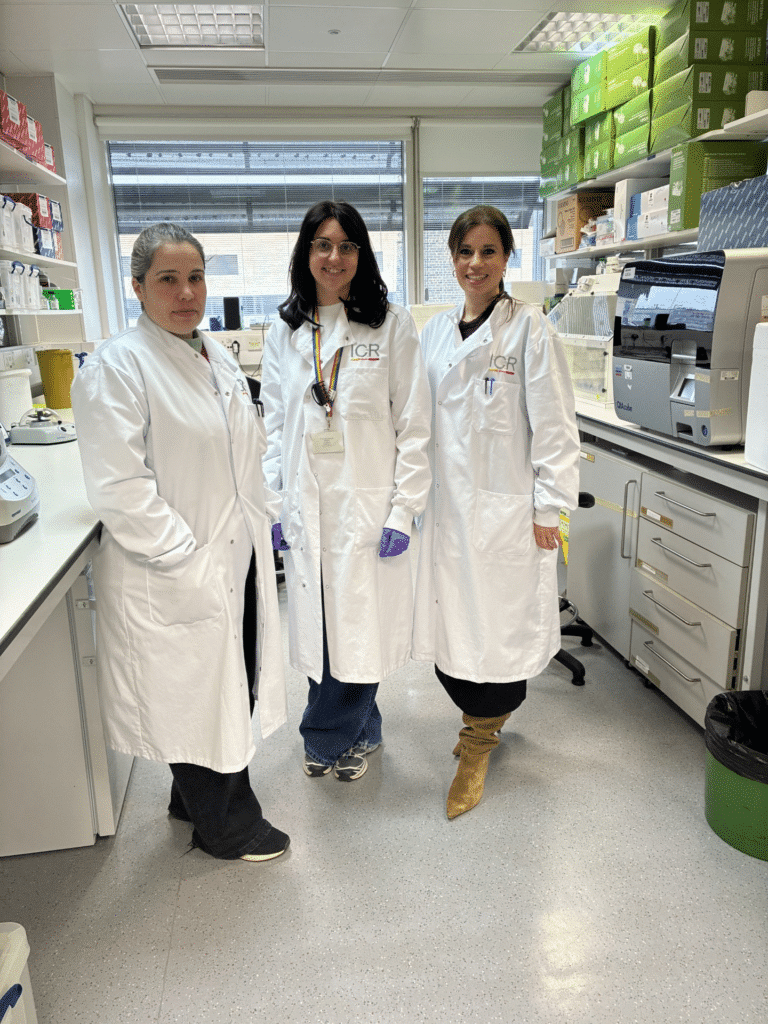
The team at ICR
Paediatric-type diffuse high grade gliomas are aggressive childhood brain tumours, associated with poor survival. There is urgent need to develop new treatments for children and teenagers with this disease.
One approach that is currently gathering momentum is the use of Immunotherapy, which utilises the body’s own immune system to fight cancer cells by helping the immune system better recognise and attack them.
At the Institute of Cancer Research, London, a team led by Dr. Julia Cockle are interested in developing a particular type of immunotherapy using oncolytic viruses for children with paediatric-type diffuse high grade gliomas.
Oncolytic viruses are special in the way that they can preferentially infect and kill cancer cells, while leaving normal cells unharmed. Alongside their ability to directly kill cancer cells, oncolytic viruses can also release signals that stimulate the body’s own immune system to recognise and attack the tumour. This can act to ‘heat-up’ the environment surrounding a tumour and can means the tumours are more responsive to immunotherapy treatments.
Furthermore, combining oncolytic viruses with other cancer treatments has the potential to improve cancer-cell killing and may improve outcomes for patients.
Understanding more about how these oncolytic viruses work and how they can be used in combination with other treatments will guide future clinical trials for young patients with paediatric-type diffuse high grade glioma.
At the Institute of Cancer Research, using state-of-the-art techniques, scientists can now identify and position immune cells around a tumour and explore their activity.
They are working with a range of oncolytic viruses to evaluate how these viruses can alter the types of immune cells surrounding a tumour and how this can ‘heat-up’ this environment and make it harder for the tumour to survive.
The latest news is that the team at ICR have now demonstrated that their oncolytic viruses can kill paediatric-type diffuse high grade glioma tumour cells.
They have also shown that the oncolytic viruses can increase the number of immune cells surrounding these tumours, including T-cells, that have the potential to recognize and kill cancer cells. Furthermore, they have also observed that oncolytic virus treatment can deplete immune cells that act to protect the tumour.
For the next stage of this project, Dr. Cockle and her team will now explore drugs in combination with their oncolytic viruses to identify if this can enhance the activity of the viruses. This will help guide new treatment options for patients.
OSCARs Paediatric Brain Tumour Charity have funded this project as part of their 2024/25 research call. Marie Hughes, founder of the charity said, “Having worked with families whose children have been diagnosed with diffuse high-grade gliomas and seen such poor prognosis – just 2% of children diagnosed survive past five years- the charity felt it was essential to explore key research to change the options from medical teams being left with no other choice but to tell families to go an make memories.”
Dr. Cockle said, “Our work will advance understanding of the use of oncolytic virus therapy for children and young patients with paediatric-type diffuse high grade glioma, an area of unmet clinical need where new treatment approaches are very much needed. Our work has the potential to improve survival for this patient group and will inform future clinical trials for children with this devastating diagnosis.”