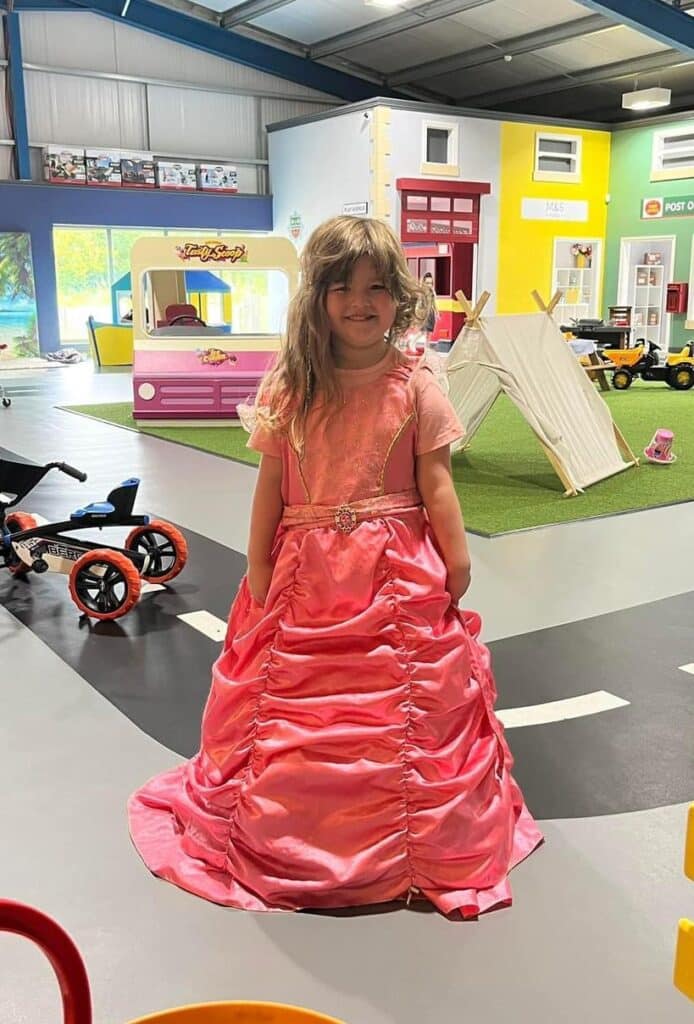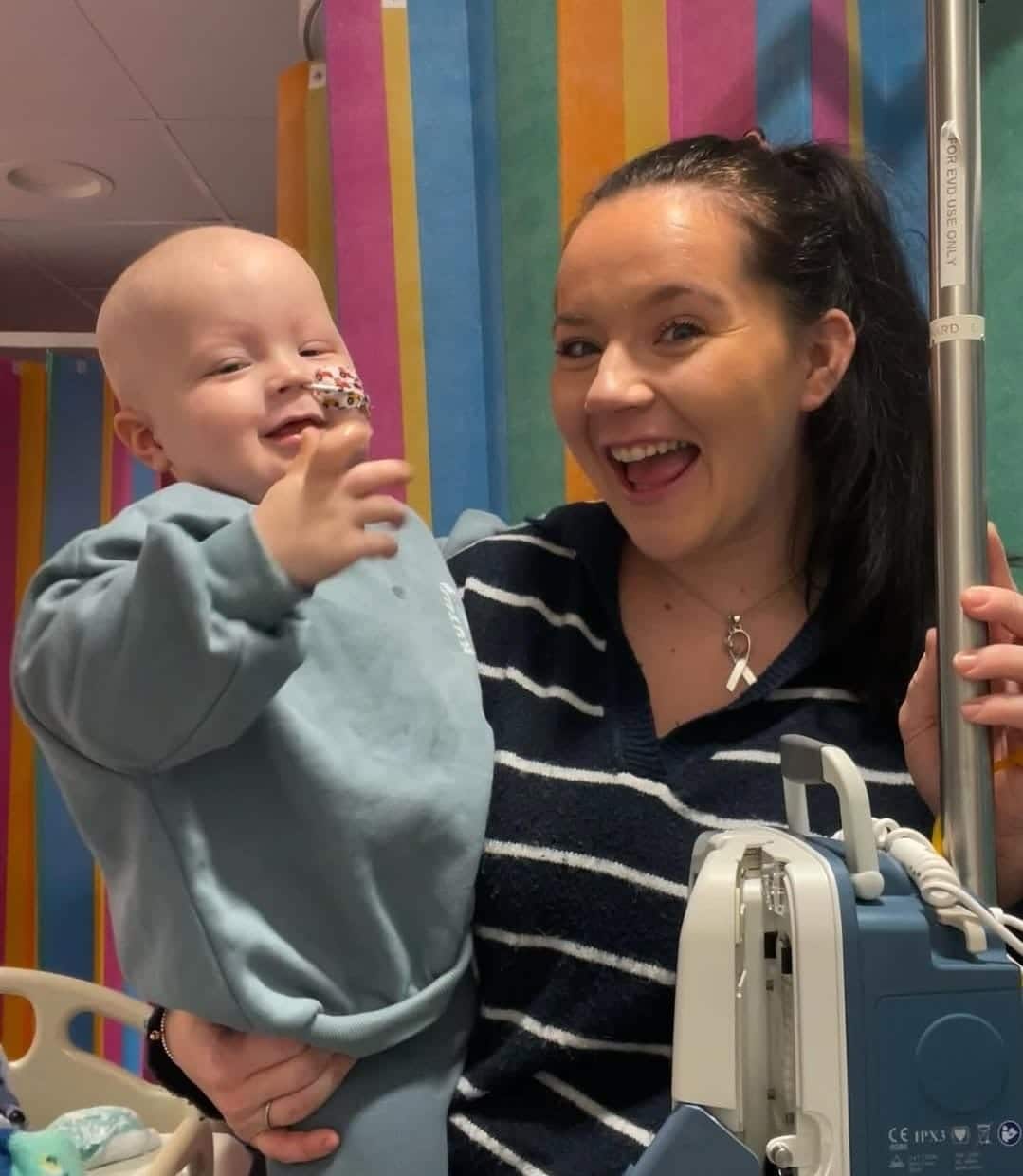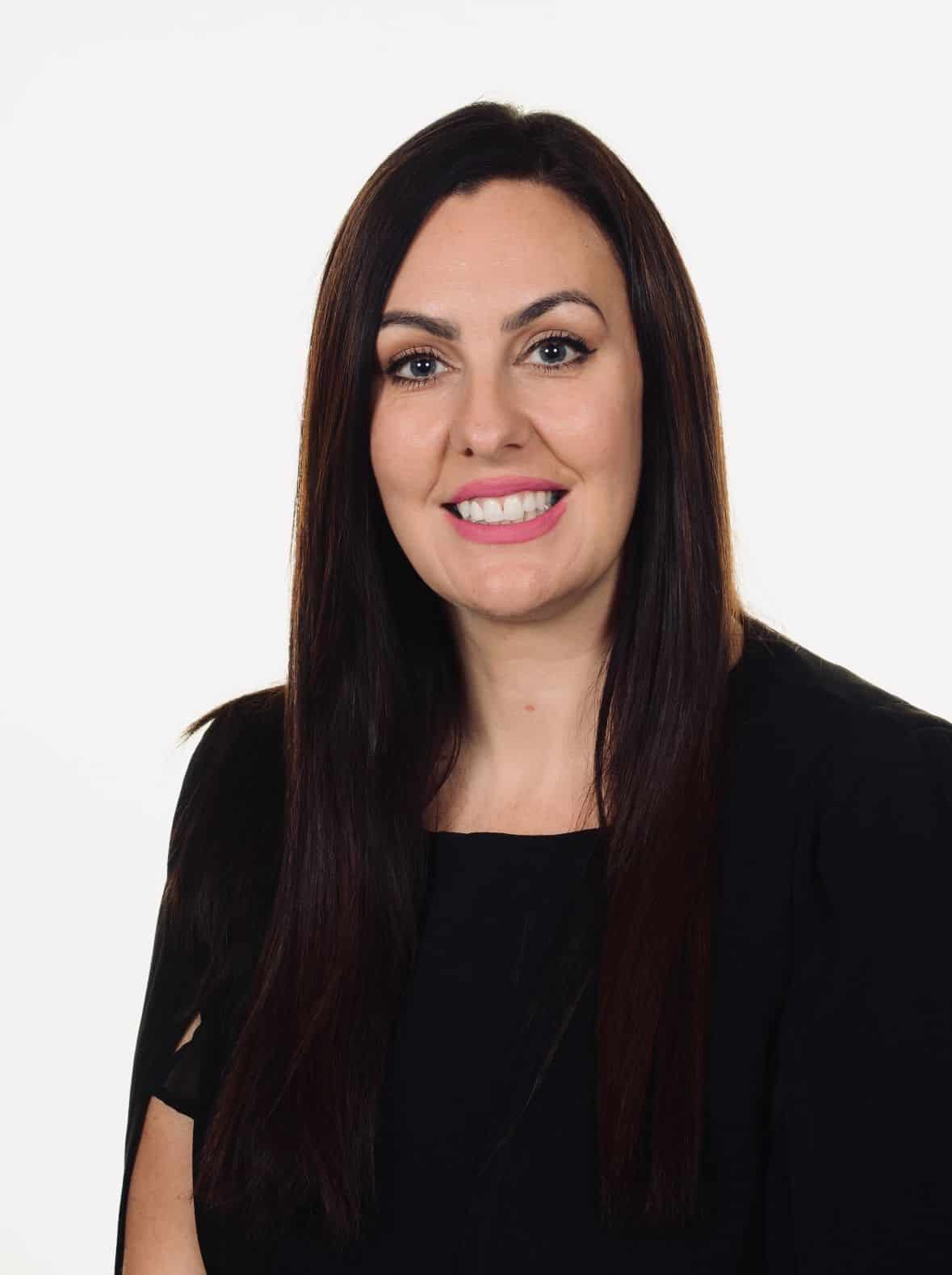
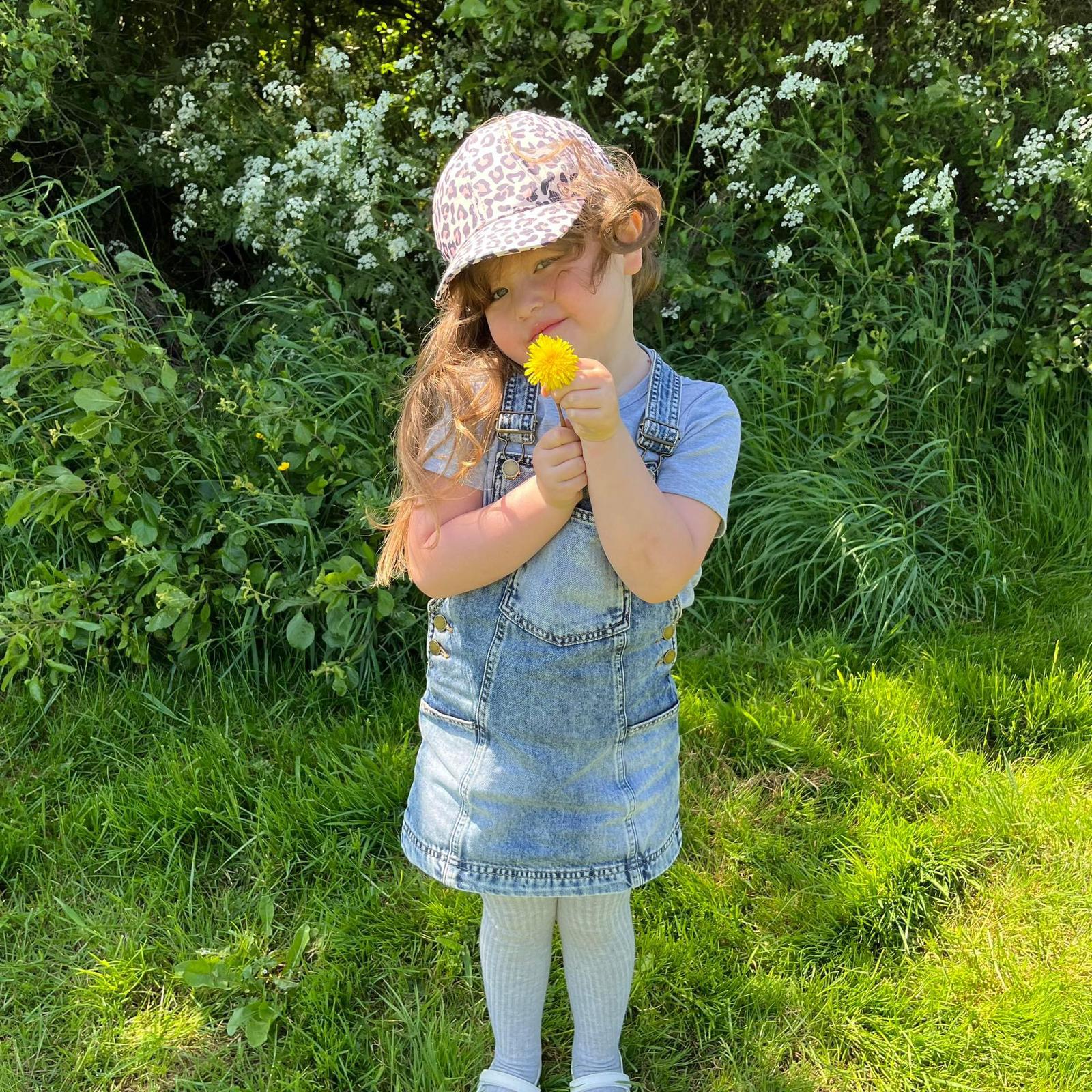
Mila was born on 29th November 2018. She was such a good baby, always smiling and loved to pull funny faces. She grew into a loving and caring two-year-old, and very intelligent for her age. She started nursery in January 2022, full of life and was always up to mischief with her friends. Mum Wendy shares what happened next:
How it all started
In June 2022 we noticed Mila’s health deteriorated. She began to be sick in the mornings but would feel perfectly fine afterwards. Her mood could suddenly change at the drop of a hat and she started to fall asleep in the strangest of places.
It was at this point we took her to see the GP. They didn’t do any tests and said she was constipated, and that’s why she was being sick. They prescribed laxatives.
Mila’s symptoms continued even whilst taking the laxatives. During July, Mila had her sports day, which she was so excited for. It was then that we noticed her running funny on her right leg, almost as if she was dragging it. We just thought she might be flat footed, but oh were we wrong.
In August 2022, Mila had an appointment with her allergy doctor at our local hospital. He asked if we were worried about anything else, and this is when I told him about the problems we had been having. He was so good with Mila, doing all his tests while she continued to laugh and smile. This is where he referred us for an urgent MRI, bloods and neuro assessment.
However, she never got to make these appointments. On the 1st of September 2022, we noticed she was having tremors in her right arm and refused to use it. This started to ring alarm bells, so I rang her allergy doctor and he advised to take her to our local children’s ward immediately. They asked for an urgent MRI, but due to the anaesthetists being unavailable they opted for a CT scan.
This is when we were first told the most terrifying new: Mila had a tumour and possibly a cyst on her brain and would need to be transferred to Sheffield Children’s Hospital that night. We thought we were going to lose her. She travelled by ambulance with me and our family met us there.
Sheffield Children’s Hospital
We arrived at Sheffield at about 1am in the morning, was observed over night and underwent an MRI in the morning. We got to see how big the tumour and cyst really were. This alone scared us all.
After the MRI and results, we had a multidisciplinary meeting with all that would be involved. In that meeting they agreed a treatment plan and surgery for the end of the week. She was to stay in the hospital so they could monitor her closely in case anything occurred and to ensure she was close by if they had to rush her to theatre. She was put on steroids to try and reduce the swelling around the tumour.
One story my family (especially my sister) won’t let me live down, is when we were in the meeting with so many people, they mentioned the lake that was nearby with ducks on and to take Mila there, and I was so hungry from the previous few days, I said, “I could just eat a duck.” The oncologist turned round and said, “Please don’t as the children like them.” It’s amazing the funny things you remember in the midst of such trauma.
The day of the surgery

Part of us couldn’t wait for this tumour and cyst to be removed, but it also frightened us to the point where we could lose her. At 9am, we left our precious little girl in the hands of the anaesthetists, surgeons, ODPs and nurses. We tried to go out and do a bit of shopping, but our minds and hearts weren’t in it, so ended up back on the ward in her room even though we knew she wouldn’t be there. Being there helped us feel as close to her as we could get in these circumstances.
At 4pm, a surgeon came and spoke to us to say she was currently in the MRI to check how the surgery had gone. They explained that when testing her motor skills they had no reaction on her right side, but they were hopeful this would return within time. Three-and-a-half hours later, we finally received the call that we could go down to recovery. She was awake, talking and moving her right side (which we were shocked about), hitting the nurses and telling them how to pronounce her name properly – just typical Mila.
We were told she would be going to the intensive care unit (ITU) following the surgery, but as she was doing so well and the nurse looking after her was ITU-trained, she bypassed ITU and came straight back to the ward. The first thing she wanted was her oat milk.
Mila was moving from strength to strength, and after 5 days post-operation, we were allowed to bring our warrior princess home. My sister moved in to help support me and Mila. I’m so grateful to her for doing this, although I wouldn’t have been able to stop her anyway, as they have the closest of relationships – she’s like Mila’s second mother.
Diagnosis
On 27th September, on what we thought was a routine wound check up, our world was turned upside down. It was here they told us of the diagnosis that she had a Grade 3 Ependymoma, which meant it was cancer. The good news of that day was that the surgery had been a great success and they had been able to remove it all.
Mila yet again made us laugh, even on the darkest day. She often wanted the toilet when doctors would visit on the ward, to the point where they had bets as to whether she went or not. The surgeon asked her if she had been, and typical Mila turned round and said very clearly, “I had a poo!” Everyone laughed which helped a bit.
Next was difficult conversations with family and friends about the diagnosis, but the support we received was astronomical and I couldn’t thank them enough. After that, it was all go go go. The following week, Mila was booked in for a lumbar puncture to check her cerebro-spinal fluid (CSF) for any signs of the cancer. A week after, she got her broviac line inserted and then had to have it removed and replaced after it moved. She thought it went all round her body, but I explained.
This is where she also started to participate in the SIOP Ependymoma II (SIOP EPII) trial. Her name went into a computer program where it would do a randomised decision on if she would partake in chemotherapy or not. As the saying goes, the computer said no.
Treatment
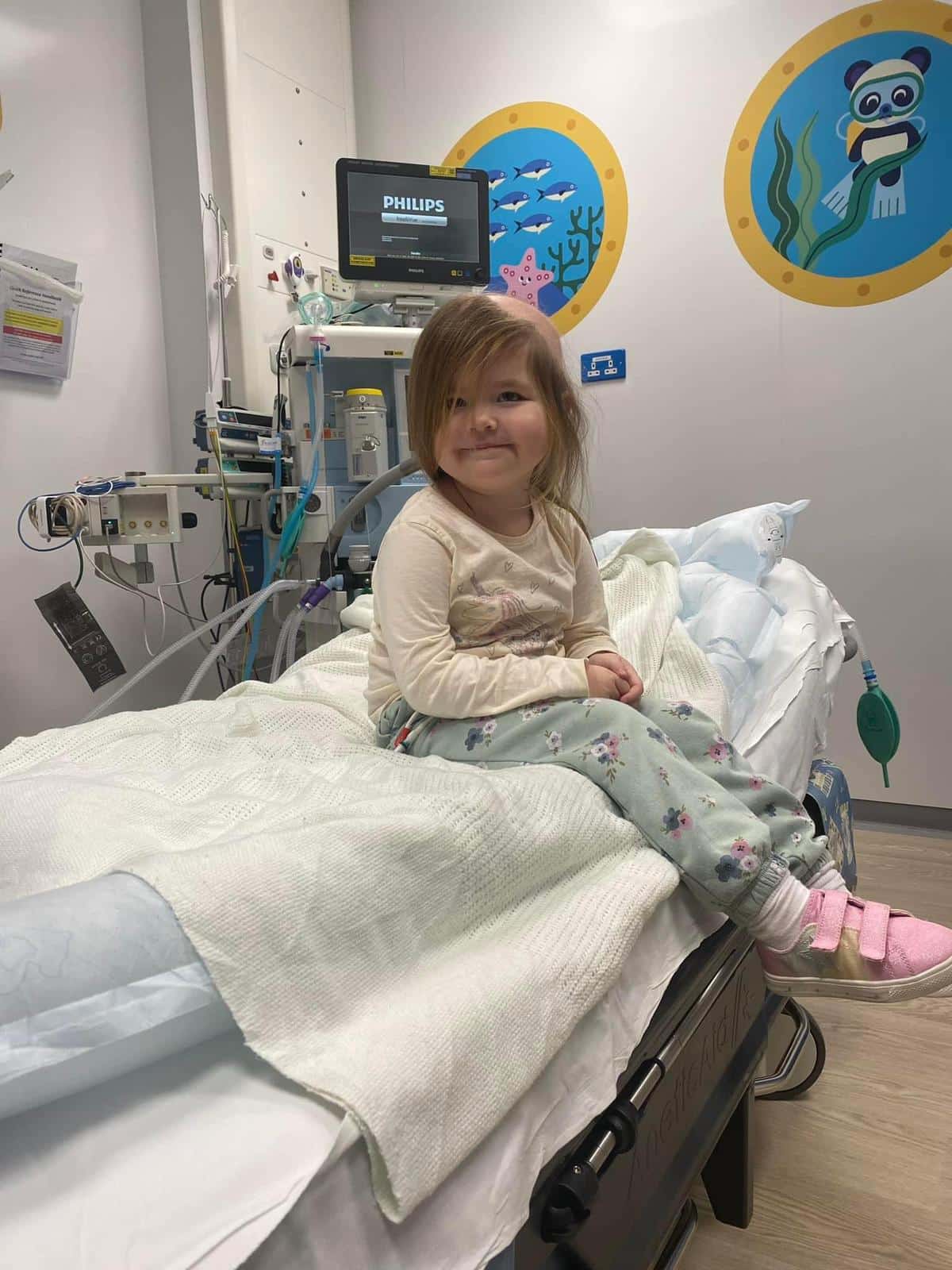
On the 2nd November, we moved to Manchester where Mila would have her proton beam therapy treatment. She developed a sassy character and we loved it (and still do…most of the time!). She also celebrated her 4th birthday and went ice skating for the first time. We had a family celebration at the hotel who provided us with a room.
This was also where she lost part of her gorgeous hair, which left us heartbroken as we didn’t know at that point if it would grow back or not. But all through her treatment she was so loving, caring, empathetic towards other children and the staff loved her. She also made a great friend called Jasper, who she rode in the mini bus with every weekday to their treatment.
She rang the bell on 16th December 2022, after 33 rounds of proton beam therapy. We celebrated with the staff and other guests at the hotel with sparklers, which she thoroughly enjoyed.
In January she had a post-treatment MRI and lumbar puncture, which luckily came back as clear of the disease. She would then have an MRI every 3 months for the first year due the aggressiveness and high re-occurrence of the cancer. We did have a few scares where we thought it may have come back, which resulted in early MRIs but they were clear.
She is now in her 2nd year and is having MRIs every 4 months. If these are all clear for this year, she goes to every 6 months in 2025.
Present Days
Due to the amount of radiation Mila has received, she has now got to wear a hat whilst outside to protect against UV rays. Sometimes she’s OK with it, but not always. They will have to be worn for the rest of her life. She now has a great selection of hats she can choose from and OSCAR’s are providing funding for more. It is a simple gesture, but an important one.
At present we are dealing with some side effects of the tumour and treatment, such as learning difficulties, which has lead to getting assessed for autism that she is showing many signs of
She has also been referred to the urologist due to the accidents she has started to have. We are unsure at present as to why this has started, but her recent scan in April 2024 is all clear.
She can be very overwhelmed and get anxiety in crowds. We have managed to work out what can calm her down, which normally involves her tablet and headphones. Sometimes we get stared at because Mila has her tablet and headphones in public, but this is the best way to keep her relaxed, and sometimes the only way. Sometimes we feel we get judged, but we will always do what is best for Mila.
A recent holiday showed us that some people admire what she does, as we took a video of her walking down the street of Ilfracombe listening to music on her headphones and dancing down the street while people were watching and smiling. It’s the little gestures like that which makes us smile.